Fish-Only Saltwater Aquariums (FOWLR): How to Plan, Stock, and Run One
Want the color and personality of marine fish without keeping corals? A Fish Only With Live Rock aquarium makes the fish the stars — including the angels, butterflies, triggers, puffers, and predators that would never work in a reef. Built around tangs, big angelfish, or a colorful community, a FOWLR can be every bit as impressive as a reef. Want corals? Read the Reef Aquarium guide instead.
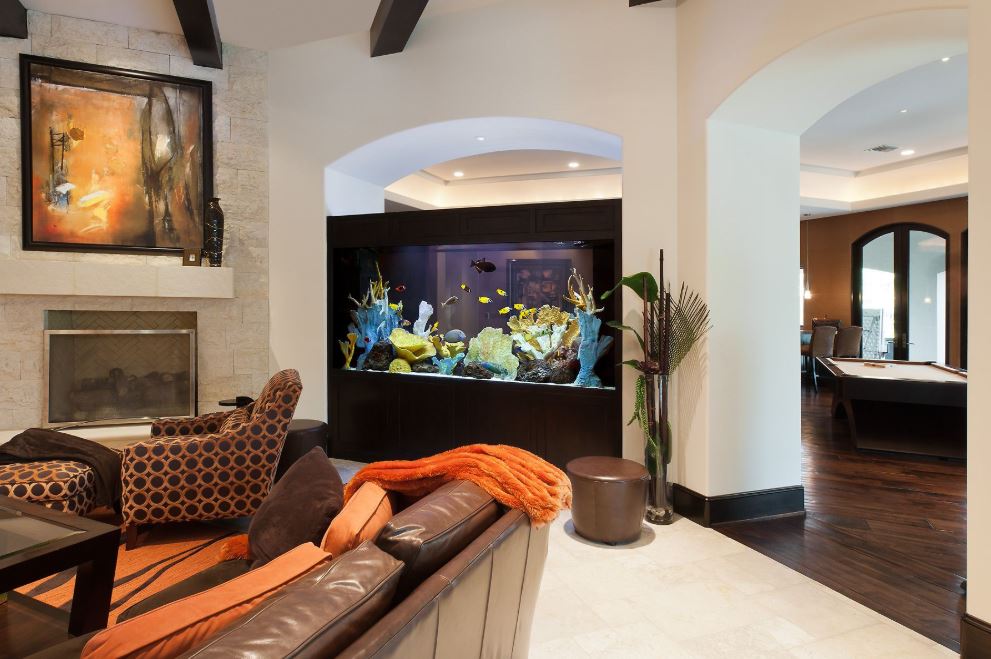
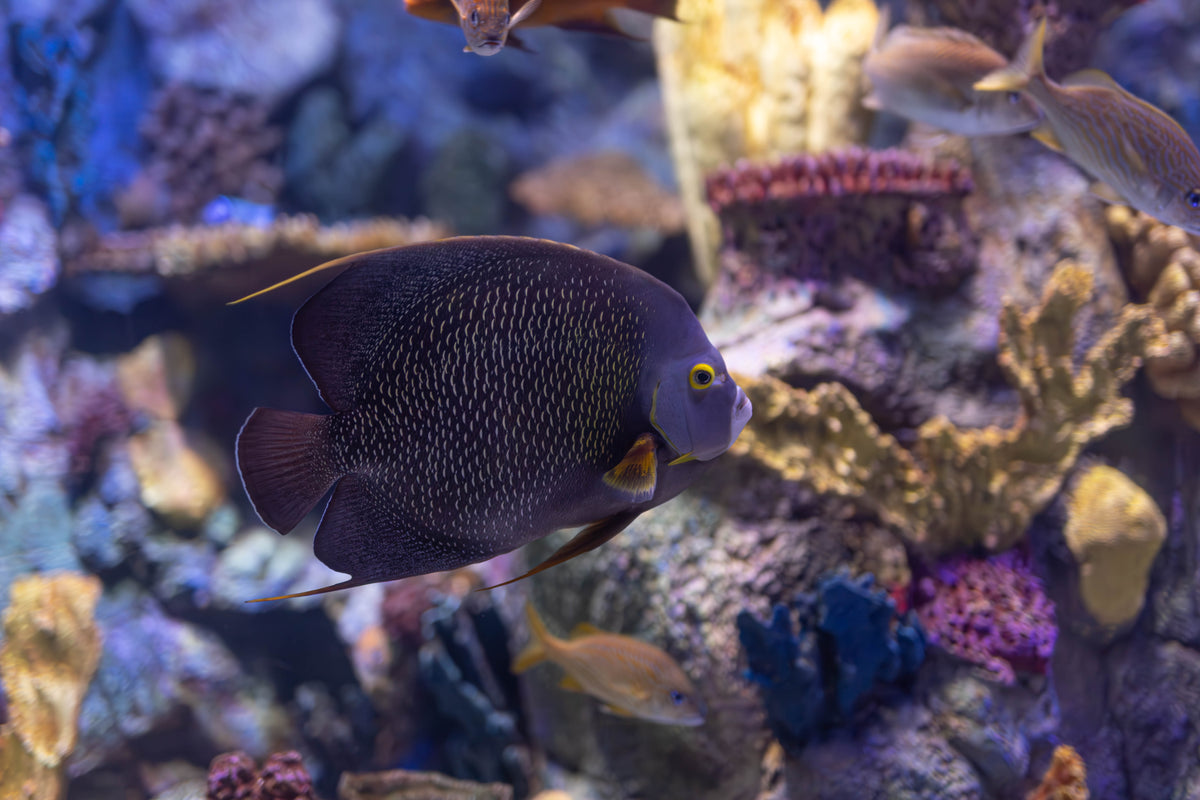
Make the fish list first. Adult size, swimming needs, behavior, aggression, diet, and compatibility decide the tank size, rockwork, filtration, and stocking order. If the tank those fish need is bigger than your space or budget, change the list — not the needs of the fish. And although the name says "live rock," we start every new system with dry reef rock; it goes live during the cycle.
Is a fish-only saltwater aquarium right for you?
Why choose FOWLR
- Far more marine fish to choose from — you're not limited to reef-safe species
- The fish are the attraction: color, behavior, movement, personality
- No coral lighting — light the tank for viewing, not PAR targets
- No alkalinity, calcium, or coral dosing
- The right home for large, active display fish
What to know going in
- Saltwater still needs stable salinity, temperature, and water quality
- Big fish make big bioloads — filtration is sized for adults, not the juveniles you buy
- "Not reef-safe" doesn't mean "compatible with everything" — aggression and territory still rule
- Tangs, big angels, and triggers need far more swimming room than store size suggests
- Quarantine still matters — valuable fish get hard to catch later
A reef is designed around the combined needs of fish, corals, and inverts. A FOWLR is designed around the fish. That changes the livestock, the aquascape, the lighting, the filtration priorities, and how the tank gets stocked. If the fish themselves are what excite you — especially species that can't go in a reef — FOWLR is probably the better aquarium.
What kind of fish collection do you want?
A peaceful marine community and a tank built around triggers or predators are very different projects. Decide the collection before the tank.
Marine community
Colorful & generally peacefulTypical fish
Clownfish, cardinalfish, gobies, blennies, smaller wrasses, selected dwarf angels.
Best for
Marine color and personality without building around corals.
Planning priority
Species with different swimming and territory habits so they use different parts of the tank.
Large angels & tangs
Showpiece marine fishTypical fish
Large angelfish, tangs, rabbitfish, larger wrasses, active open-water species.
Best for
Larger tanks where individual fish become the centerpiece.
Planning priority
Tank length and open swimming room. Plan for adult size and activity, not the juvenile.
Aggressive & semi-aggressive
Big personalitiesTypical fish
Triggerfish, larger wrasses, puffers, certain angels, hawkfish, other assertive species.
Best for
Bold fish behavior and species that don't belong in a reef community.
Planning priority
Compatibility and stocking order. Rockwork creates territories and breaks sight lines while keeping swimming room.
Predator aquarium
Built around specialized fishTypical fish
Lionfish, groupers, moray eels, large predatory wrasses.
Best for
Experienced keepers who want a display around large or predatory species.
Planning priority
Adult size, feeding, escape prevention, tankmates that can't become food, heavy bioload, filtration capacity.
Size the aquarium around the adult fish
Adult size, swimming behavior, aggression, body mass, and waste all matter — not just headcount. Dimensions matter too: long, active swimmers get more from tank length than from gallons added as height. Gallon ranges are a starting point, not a stocking rule.
Small marine
A carefully chosen small community: clownfish, gobies, blennies, cardinalfish.
Fewer options and less water to buffer changes — stock conservativelyVersatile community
Bigger community combos with selected wrasses and dwarf angels.
More flexible, still no room for large or highly active fishLarger community
Larger wrasses, selected angelfish, rabbitfish, medium species whose adult needs fit.
Research the exact species — look-alikes can differ hugely as adultsLarge FOWLR
Showpiece communities with some tangs, angels, larger wrasses, and triggers.
Size skimming, oxygenation, flow, and maintenance for the adult bioloadShowpiece FOWLR
Big angels, tangs, triggers, puffers, and selected predators.
The whole system is designed around the livestock from day oneA tall tank and a long tank can hold the same water and give an active fish very different lives. Territorial species also need footprint for rockwork and separate territories. Don't build a 75 around a fish that will need six feet. Choose the tank that works for the adult fish, or choose fish that fit the tank you can realistically maintain.
Shop Tanks & Stands → UNS All-in-One Tanks Not sure? See them in the showroom
Rockwork: filtration, territory, and swimming space
Rock is biological filtration, hiding places, sleeping spots, territories, and sight-line breaks. But more rock isn't better — many marine fish need real open water. Build a functional structure, not a wall.
Filtration: plan for the bioload
Popular FOWLR fish are large-bodied with big appetites, and everything they eat becomes waste the system has to process. Don't size filtration for the new, lightly stocked tank — size it for the adult fish you intend to keep.
A young angel, trigger, puffer, tang, or grouper makes little waste today. That changes dramatically as it grows. Plan the combined adult bioload of the whole stocking list and leave filtration capacity and equipment space for the tank you'll have in a few years. Shop filtration → · Wet/dry vs. sump guide
Give the water somewhere useful to go
Flow in a FOWLR isn't about coral requirements. Its jobs are gas exchange, oxygen distribution, keeping waste from settling, and carrying debris toward the filtration. With big, active, heavily fed fish, that matters more, not less.
How we build flow
- Surface agitation — keep the surface moving for gas exchange; the sump and skimmer help too
- DC wavemakers — controllable, and several smaller pumps cover better than one big one
- Return flow isn't everything — the return moves water through filtration; wavemakers handle internal circulation
- Kill detritus traps — behind and under rock is where food and waste settle
- Adjust for the fish — broad circulation, not a current they fight all day
Plan flow with the rockwork
- Surface: visible movement, always
- Behind the rock: no stagnant pockets
- Across the bottom: push loose debris toward where it can be siphoned or captured
- Open water: circulation without turning the swim lane into a treadmill
Your first fish should be chosen with your last fish in mind
More fish choices means planning matters more. Before the first purchase, write the stocking plan for the finished tank and the order each fish goes in.
Every new fish adds food and waste the biology has to catch up to. Stock in stages, keep testing, and watch each addition. If a new fish causes sustained aggression — not short-term posturing — rearranging part of the rockwork can reset territories. Some fish simply won't coexist regardless of tank size. See our marine fish (in-store only) →
The best time to catch a problem is before the fish goes in
Marine fish can carry parasites or disease with no visible symptoms. Once a fish is in a 180 full of caves, catching it may mean tearing down the scape — and one problem fish exposes the whole collection.
A simple quarantine setup
- Tank sized for the fish you expect to quarantine — bare and easy to observe, not a mini display
- Simple filtration, manageable bio and mechanical
- Heater & thermometer, verified independently
- Nonporous hides — easy to remove and clean
- Dedicated nets, siphon, buckets — don't share wet gear with the display
- Secure cover — many marine fish jump
What you're watching for
- Appetite: eating consistently, accepting an appropriate diet
- Breathing: abnormal or rapid respiration
- Skin & fins: spots, coatings, wounds, damage, discoloration
- Behavior: how it swims, rests, reacts to food, uses the tank
FOWLR aquarium checklist
No coral lighting, PAR targets, or dosing pumps. Put that money where a FOWLR needs it: the right size tank, excellent filtration, good circulation, stable water, and healthy fish. Buy for the finished aquarium, not the first few months.
Aquarium & life support
- Properly sized aquarium & standAdult size, behavior, and swimming needs; access to equipment
- Sump or AIO filtrationSump for full-size; AIO for smaller, lightly stocked systems
- Return pumpSized for tank, overflow, plumbing, filtration
- Heater & thermometerVerify actual temperature independently
- Secure cover or lidMany marine fish jump
Rockwork & aquascape
- Dry reef rockStructure, territories, hides, biological filtration
- Sand or substrateFor the look, flow, and livestock
- Secure structure, caves, open waterBuilt for adult fish and diggers
Filtration & nutrient control
- Protein skimmerCapacity for the adult fish load and feeding
- Mechanical filtrationSocks, pads, or roller
- Biological mediaBeyond the rock
- Carbon or PurigenDissolved organics, clear water
- Algae turf scrubberLarger or heavily fed systems
Flow, water & testing
- DC wavemakersSurface agitation, flow behind rock
- RO/DI water & quality marine saltFor startup and water changes
- RefractometerSalinity of tank and new water
- Ammonia, nitrite & nitrate testsCycling, troubleshooting, nutrient tracking
Stability, maintenance & quarantine
- Auto top-off + RO/DI reservoirStable salinity
- Timers or controllerOptional — lights, equipment, alerts
- Scraper, siphon, mixing container & pumpRoutine water changes
- Fish foodsVaried, by the species you actually keep
- Quarantine tank, filter, heater, hides, dedicated netProtect the collection
How to set up a FOWLR aquarium, in order
The important decisions — livestock, tank size, filtration, aquascape, stocking order — happen before you buy a fish. Get the order right and you skip the expensive redesign around fish you already own.
Choose your fish first
Make the planning list. Research adult size, temperament, diet, swimming behavior, territory, and compatibility with everything else on the list.Check the plan works
Aggression, look-alike rivals, predator-prey, feeding behavior, territory. Decide the introduction order now.Choose the aquarium for the adults
Length and width, not just gallons. If the fish need more than you can house, revise the list.Plan filtration and equipment for the bioload
Sump or AIO, skimmer, return, mechanical and bio media, heater, ATO, DC wavemakers — with room to maintain it all.Build the rockwork
Dry rock, before livestock. Multiple caves and territories, broken sight lines, stable structure, plenty of open water, room behind for flow and cleaning.Fill and start the system
Properly mixed saltwater, filtration and circulation on, temperature and salinity verified. Check plumbing, overflow, return, heaters, pumps, and ATO.Complete the fishless cycle
Dose an ammonia source until the biology processes ammonia and nitrite to zero. Judge it by testing, not by days. Read the saltwater cycle guide · Use the calculatorQuarantine your first fish
Observe in a separate system: eating, breathing, swimming, skin, fins.Add the least aggressive fish first
Follow the compatibility plan. Peaceful fish establish before territorial species, with species-specific exceptions.Stock gradually
Each fish adds food and waste. Add in stages, keep testing, watch compatibility, let the biology catch up.Begin the maintenance routine
Test, water changes, clean mechanical media, service the skimmer and pumps, replace chemical media, remove detritus. Re-evaluate as the fish grow.Fish-only does not mean maintenance-free
Large marine fish eat a lot and produce a lot. The routine keeps that waste from accumulating. The schedule is set by what's actually happening in your system — stocking, fish size, feeding, filtration, and test trends.
The goal isn't the lowest possible nitrate and phosphate — it's stable water, healthy fish, reasonable nutrient accumulation, and a schedule that keeps the system under control. If nutrients keep climbing between maintenance, look at the whole system: feeding, stocking, mechanical filtration, skimmer performance, detritus, export, and water-change frequency. And remember the same fish make a very different bioload a year from now. Or let us handle maintenance →
Go deeper before the first fish
Saltwater Fishless Cycle
How biological filtration develops and when the tank is ready.
AquascapingSaltwater Rockwork
Stable structures with height, caves, swimming room, and flow.
Protect the displayWhy Quarantine New Fish
The one reason that surprises most marine keepers.
FiltrationWet/Dry vs. Sump
Why a sump gives a large saltwater system so much flexibility.
Still deciding? Compare with Freshwater, Planted, and Reef, or compare all four.
Want the system designed, installed, and maintained?
Bring us your ideas, photos of the space, rough measurements, and the fish you want. Our marine biologist on staff will plan the tank size, filtration, flow, rockwork, and stocking plan before you buy a thing — then deliver, plumb, install, and keep it healthy. Every service is à la carte.
FOWLR aquarium FAQ
What does FOWLR mean?
Fish Only With Live Rock — a saltwater aquarium built around marine fish and rockwork, without corals. We start new systems with dry reef rock; it becomes live during the fishless cycle.
Is a FOWLR easier than a reef?
Simpler in some ways: no coral lighting, PAR targets, or dosing. But saltwater stability, filtration, quarantine, and compatibility still apply, and large fish make far more waste than reef fish. Different, not effortless.
Can I keep any fish that isn't reef-safe together?
No. Removing corals removes one restriction, not the rules of compatibility. Adult size, aggression, look-alike rivalry, predation, and stocking order still decide who can live together.
How big a tank do I need for a tang or large angelfish?
Bigger and longer than the juvenile suggests. Many need 125–180 gallons or more and prioritize tank length for swimming room. Research the exact species and plan for the adult from day one.
Do I really need a protein skimmer on a fish-only tank?
On any full-size FOWLR, yes — heavily fed, large-bodied fish are exactly what a skimmer is for. Buy capacity for the adult bioload.
Can you set up a fish-only saltwater aquarium for me?
Yes. We design, build the rockwork, plumb, deliver, and install throughout Broward, Palm Beach, and Miami-Dade, starting at $150 for a small aquarium with décor, and we offer ongoing maintenance. Marine fish are sold in-store only.


